
Artificial Intelligence (AI) is no longer a futuristic concept. It has become one of the most powerful technologies transforming the way people work, communicate, and run businesses. From automated customer support to advanced data analysis, AI is helping companies improve productivity, reduce costs, and make smarter decisions.
The AI revolution is changing industries worldwide. Businesses are adopting artificial intelligence to automate repetitive tasks, create personalized customer experiences, and develop new products and services. At the same time, employees are learning new skills to work alongside AI tools and take advantage of new opportunities.
This article explains how artificial intelligence is changing jobs, businesses, industries, and the future of work.
What Is Artificial Intelligence?
Artificial Intelligence refers to computer systems that can perform tasks that normally require human intelligence. These tasks include learning, problem-solving, decision-making, understanding language, recognizing images, and analyzing information.
Modern AI systems use technologies such as:
- Machine Learning
- Natural Language Processing (NLP)
- Computer Vision
- Generative AI
- Deep Learning
Unlike traditional software, AI systems can learn from data and improve their performance over time.
The Growth of the AI Revolution
Over the past few years, AI has developed rapidly. The introduction of generative AI tools has made artificial intelligence available to millions of users worldwide.
Businesses and individuals now use AI for:
- Content creation
- Data analysis
- Software development
- Marketing
- Customer service
- Healthcare research
- Financial planning
- Business automation
AI adoption is increasing because companies want faster solutions, better customer experiences, and improved efficiency.
How Artificial Intelligence Is Changing Jobs
AI is transforming the workplace by changing how employees complete daily tasks. While some tasks are becoming automated, AI is also creating new career opportunities.
Automation of Repetitive Tasks
One of the biggest impacts of AI is automation. Many repetitive tasks that previously required hours of human effort can now be completed quickly with AI tools.
Examples include:
- Data entry
- Basic reporting
- Email management
- Document processing
- Scheduling
- Customer support responses
Automation allows employees to focus on more creative and strategic work.
AI Is Creating New Job Opportunities
Although AI is changing traditional roles, it is also creating new professions.
Some emerging AI-related careers include:
- AI Engineer
- Machine Learning Specialist
- Data Scientist
- AI Product Manager
- Prompt Engineer
- AI Content Specialist
- Automation Consultant
- AI Ethics Specialist
Companies need professionals who understand both technology and business needs.
The Importance of AI Skills in the Workplace
As AI becomes more common, employees with AI knowledge may have more opportunities to improve their productivity and career growth.
Important AI-related skills include:
- Understanding AI tools
- Writing effective AI prompts
- Data analysis
- Problem-solving
- Digital communication
- Technology adaptation
The future workplace will likely involve collaboration between humans and AI systems.
How AI Is Changing Businesses
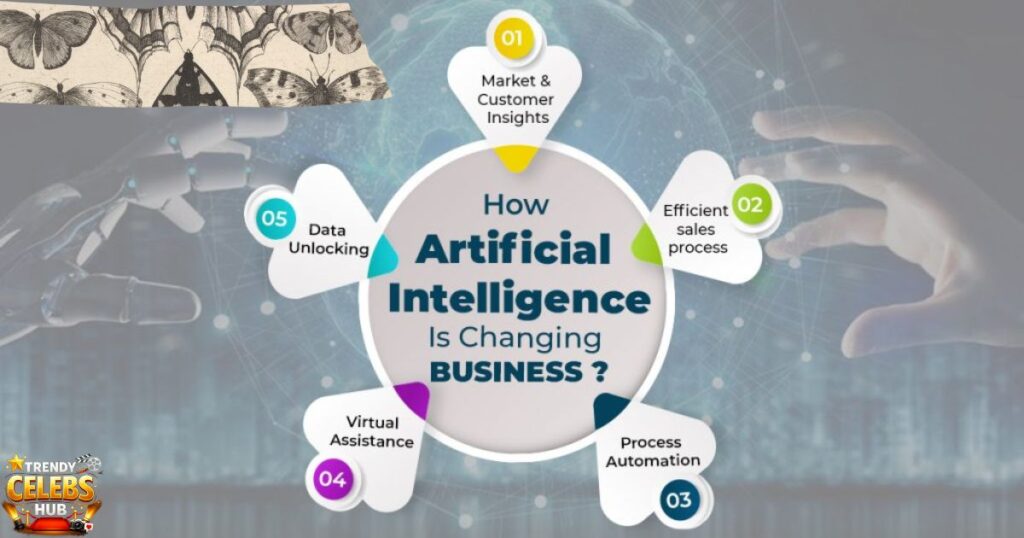
Artificial Intelligence is helping businesses improve operations, reduce expenses, and provide better services.
AI in Marketing and Advertising
Marketing is one of the industries experiencing major AI transformation.
Businesses use AI for:
- Customer research
- Content creation
- Advertising optimization
- Audience targeting
- Social media management
- Market trend analysis
AI tools help companies understand customer behavior and create more personalized marketing campaigns.
AI-Powered Customer Service
Customer service has changed significantly because of AI chatbots and virtual assistants.
AI customer service tools can:
- Answer common questions
- Provide 24/7 support
- Handle multiple conversations
- Recommend solutions
- Improve response times
Many businesses use AI assistants to support human customer service teams.
AI in Business Decision-Making
Companies generate huge amounts of data every day. AI helps organizations analyze this information and make better decisions.
Businesses use AI analytics for:
- Sales forecasting
- Customer behavior analysis
- Risk management
- Financial planning
- Market research
AI can identify patterns that may be difficult for humans to discover manually.
AI Transformation in Different Industries
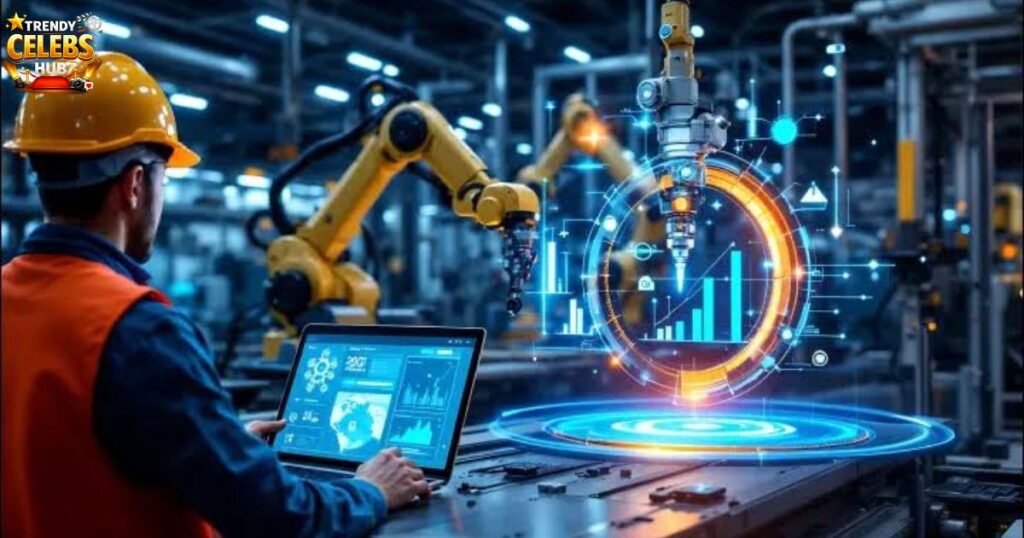
Artificial Intelligence is affecting almost every major industry.
Healthcare Industry
AI is improving healthcare through:
- Medical image analysis
- Disease detection
- Drug research
- Patient monitoring
- Healthcare automation
Doctors and researchers use AI tools to support faster and more accurate decisions.
Finance Industry
Banks and financial companies use AI for:
- Fraud detection
- Risk assessment
- Automated customer support
- Investment analysis
- Financial predictions
AI helps financial organizations process large amounts of information efficiently.
Education Sector
AI is changing learning through:
- Personalized education
- AI tutors
- Automated grading
- Learning recommendations
- Research assistance
Students can receive customized learning support based on their needs.
E-commerce Industry
Online businesses use AI to improve customer experiences.
AI helps with:
- Product recommendations
- Inventory management
- Customer personalization
- Price optimization
- Fraud prevention
AI-powered shopping experiences are becoming more common.
Manufacturing Industry
Manufacturers use AI for:
- Robotics
- Quality control
- Predictive maintenance
- Supply chain management
- Production optimization
AI helps companies improve efficiency and reduce operational problems.
Benefits of Artificial Intelligence for Businesses
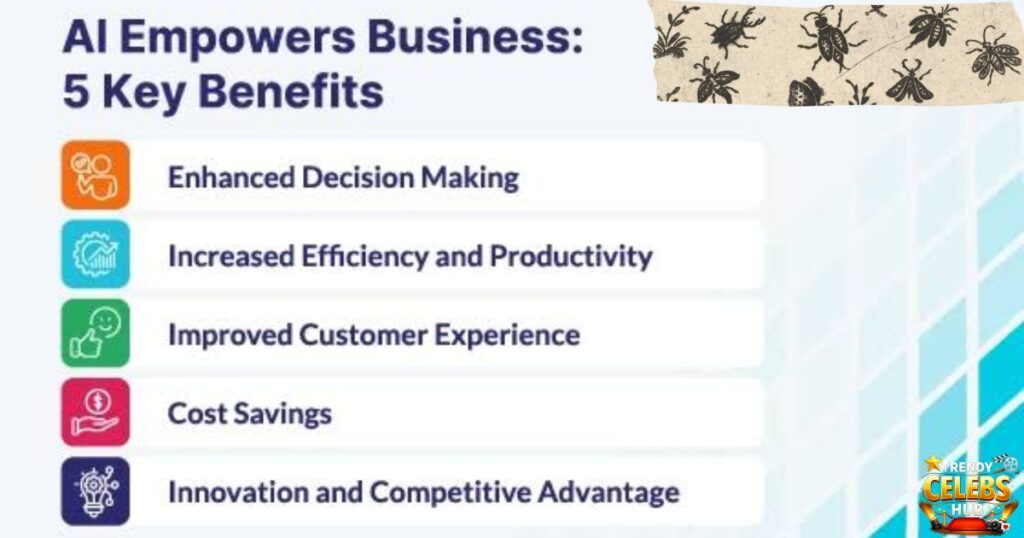
Businesses are adopting AI because of several advantages.
Increased Productivity
AI can complete tasks faster and help employees save time.
Reduced Costs
Automation reduces the need for manual processes and improves efficiency.
Better Customer Experience
AI helps businesses provide faster and more personalized services.
Improved Decision-Making
AI analysis provides valuable insights from large amounts of data.
Innovation Opportunities
Companies can use AI to create new products and services.
Challenges of AI Adoption
Although AI provides many benefits, businesses also face challenges.
Data Privacy Concerns
AI systems often require large amounts of data. Companies must protect customer and employee information.
Accuracy and Reliability
AI systems can sometimes produce incorrect results. Human review remains important.
Workforce Adaptation
Employees need training to understand and effectively use AI tools.
Ethical Issues
Businesses must ensure AI systems are used responsibly and fairly.
Will AI Replace Human Jobs?
One of the biggest questions about AI is whether it will replace human workers.
The impact of AI varies by industry and job type. Some tasks may become automated, while other roles may evolve and require new skills.
The future is likely to involve humans working together with AI rather than AI completely replacing people.
Human skills that remain valuable include:
- Creativity
- Leadership
- Emotional intelligence
- Communication
- Critical thinking
- Strategic decision-making
The Future of Artificial Intelligence
The future of AI will continue to bring major changes to businesses and society.
Future AI developments may include:
- More advanced AI assistants
- Smarter automation systems
- AI-powered business solutions
- Improved healthcare technology
- Personalized digital experiences
- Advanced robotics
Companies that learn how to use AI effectively will be better prepared for future changes.
How Businesses Can Prepare for the AI Future
Businesses should take several steps to successfully adopt AI:
Invest in AI Training
Employees should learn how to use AI tools effectively.
Identify Business Problems
Companies should use AI where it can provide real value.
Maintain Human Oversight
AI should support human decisions rather than replace responsible judgment.
Focus on Data Security
Businesses must protect sensitive information when implementing AI systems.
Conclusion
The AI revolution is transforming jobs, businesses, and industries around the world. Artificial Intelligence is helping companies automate processes, improve decision-making, and create better customer experiences.
While AI will continue changing the workplace, it also creates new opportunities for people who develop the right skills. The future belongs to businesses and professionals who understand how to work effectively with AI.
Artificial Intelligence is not just a technology trend; it is a major transformation that is reshaping the way the world works.
Frequently Asked Questions (FAQs)
1. How is AI changing businesses?
AI is helping businesses automate tasks, analyze data, improve customer service, and make better decisions.
2. Will AI replace human jobs?
AI may automate certain tasks, but it is also creating new jobs and changing existing roles.
3. Which industries benefit most from AI?
Healthcare, finance, education, marketing, manufacturing, and e-commerce are among the industries using AI extensively.
4. What skills are important in the AI era?
Important skills include AI knowledge, data analysis, creativity, problem-solving, and digital skills.
5. Why are companies adopting AI?
Companies use AI to increase productivity, reduce costs, improve customer experiences, and gain competitive advantages.
6. Can small businesses use AI?
Yes, small businesses can use AI tools for marketing, customer support, automation, and business analysis.
7. What is the future of AI in the workplace?
The future workplace will likely involve collaboration between humans and AI technologies.
8. Is AI safe for businesses?
AI can be beneficial when used responsibly with proper security, privacy, and human supervision.
9. How can employees prepare for AI changes?
Employees can prepare by learning AI tools, improving digital skills, and developing creative problem-solving abilities.
10. Why is AI called a revolution?
AI is called a revolution because it is changing how people work, businesses operate, and industries develop worldwide.