
Trump tariffs refer to import taxes introduced during Donald Trump’s presidency as part of a broader trade policy focused on changing U.S. trade relationships, encouraging domestic production, and addressing trade disputes.
A tariff is a tax placed on goods entering a country. In the United States, tariffs are generally collected by U.S. Customs and Border Protection from importers. Companies importing products may then adjust their prices, suppliers, or business strategies depending on market conditions.
During Trump’s administrations, tariffs became a major tool of economic policy. The stated goals included reducing trade deficits, encouraging manufacturing investment, addressing trade practices considered unfair by the administration, and using tariffs as leverage in negotiations with other countries.
Detailed Outline Table
| Level | Heading | Purpose | Target Question or Intent |
| H1 | Trump Tariffs Explained | Main topic overview | What are Trump tariffs? |
| H2 | What Are Trump Tariffs? | Define concept | How do tariffs work? |
| H2 | Why Did Trump Introduce Tariffs? | Explain policy goals | Why were tariffs created? |
| H2 | Timeline of Trump Tariff Policies | Historical context | When were tariffs announced? |
| H2 | How Tariffs Work | Educational explanation | Who pays tariffs? |
| H2 | Major Countries Affected | Geographic context | Which countries face tariffs? |
| H2 | Economic Impact | Analyze effects | How do tariffs affect prices? |
| H2 | Supporting Arguments | Present policy rationale | Why do supporters favor tariffs? |
| H2 | Criticism and Concerns | Present opposing views | What are tariff concerns? |
| H2 | Business Preparation | Practical advice | How can companies respond? |
| H2 | Future Outlook | Explain uncertainty | What happens next? |
What Are Trump Tariffs?
Trump tariffs are additional duties placed on certain imported products or imports from specific countries.
Unlike a sales tax paid directly by consumers at checkout, tariffs are collected when goods enter the country. The financial impact can move through supply chains:
Foreign producer → Importer → Distributor → Retailer → Consumer
The final effect depends on whether companies absorb costs, change suppliers, reduce margins, or increase prices.
Trump’s tariff policies have included several categories:
- Tariffs on imports from specific countries
- “Reciprocal tariffs” designed to respond to perceived trade imbalances
- Industry-specific tariffs under national security authorities
- Tariffs used as negotiating tools in trade discussions
The White House stated that reciprocal tariffs introduced in 2025 were intended to address large and persistent U.S. goods trade deficits and what the administration described as unequal trade practices.
Why Did Trump Introduce Tariffs?
The Trump administration has presented tariffs as a way to achieve several policy goals.
1. Reducing Trade Deficits
A trade deficit occurs when a country imports more goods than it exports in value.
The administration argued that long-term trade deficits weakened certain domestic industries and contributed to manufacturing challenges. citeturn0search3
Supporters of this approach argue tariffs can encourage companies to produce more goods domestically.
Critics argue trade deficits are influenced by many economic factors, including savings rates, currency values, investment flows, and consumer demand.
2. Protecting Domestic Industries
Tariffs can increase the cost of imported goods, potentially giving domestic producers more price protection.
The administration has highlighted industries such as:
- Steel
- Aluminum
- Automobiles
- Technology-related manufacturing
- Critical minerals
The White House has described Section 232 tariffs on certain industries as measures intended to support national security and domestic industrial capacity.
3. Negotiating With Trading Partners
Tariffs can also be used as leverage during international negotiations.The administration has argued that tariff threats or changes can encourage other countries to negotiate trade agreements or reduce barriers affecting U.S. exporters.
Timeline of Trump Tariff Policies
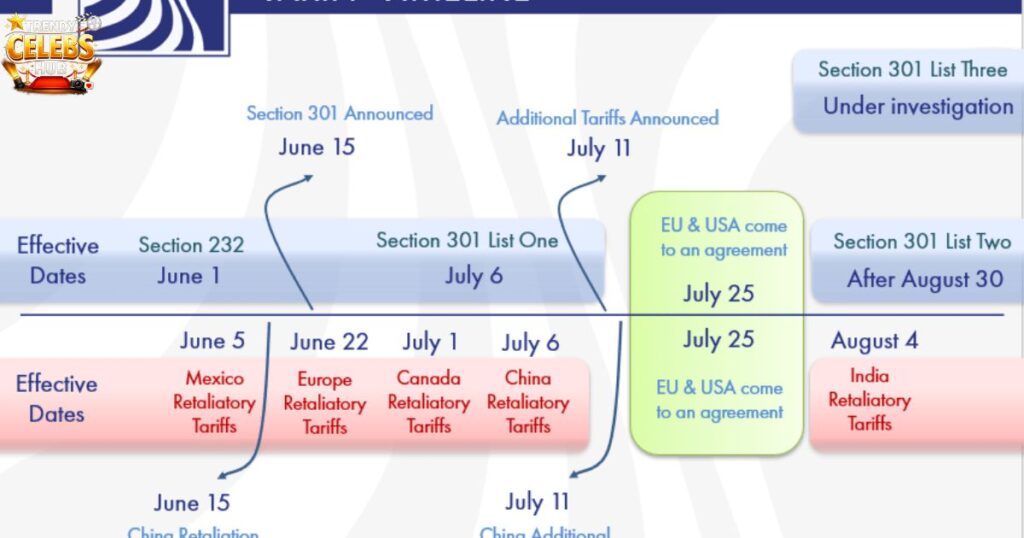
Trump’s tariff policies began during his first presidency (2017–2021), when the U.S. introduced tariffs on steel, aluminum, and billions of dollars of Chinese imports. These measures aimed to address trade disputes and encourage domestic manufacturing.
First Trump Administration (2017–2021)
During Trump’s first presidency, tariffs became a major part of U.S. trade policy.
Important actions included:
- Tariffs on steel and aluminum imports
- Trade disputes with China
- The renegotiation of North American trade rules through the USMCA agreement
The China trade conflict involved tariffs on billions of dollars of goods and led to retaliatory measures from China.
Second Trump Administration Tariff Actions
In 2025, Trump announced additional tariff measures affecting multiple trading partners.
The administration announced a reciprocal tariff framework, including a baseline tariff and additional country-specific rates. citeturn0search3turn0search7
Other announced measures included tariffs involving Canada, Mexico, China, steel, aluminum, copper, automobiles, and other sectors. citeturn0search5turn0search6
How Tariffs Work
In 2025, during his second administration, Trump introduced additional tariff actions, including broader reciprocal tariffs and measures affecting several trading partners and industries. The policies have continued to influence discussions about global trade, supply chains, and U.S. economic strategy.
Step 1: A Company Imports Products
Example:
A U.S. company buys machinery from another country.
Step 2: Customs Applies the Tariff
If the product is covered by a tariff, the importer pays the required duty.
Step 3: The Company Decides How to Respond
The importer may:
- Increase prices
- Find alternative suppliers
- Accept lower profits
- Move production locations
- Negotiate new contracts
The impact depends on competition, supply chains, and market conditions.
Major Countries Affected by Trump Tariffs
Several countries have been affected by Trump’s tariff policies, with China, Canada, and Mexico among the most prominent. China faced extensive tariffs during the U.S.–China trade dispute, particularly on a wide range of imported goods.
China
China has been one of the central targets of Trump’s trade policy.
The administration has cited issues including trade imbalances, intellectual property concerns, and supply-chain dependency. citeturn0search3
Tariffs between the United States and China have contributed to broader discussions about manufacturing locations and global supply chains.
Canada and Mexico
Trump tariff policies have also involved North American trading partners.
In 2025, the administration announced additional tariffs connected to border and drug-related policy concerns.
Because Canada, Mexico, and the United States have deeply integrated supply chains, tariff changes can affect industries that operate across borders.
Other Trading Partners
The reciprocal tariff framework announced by the administration included various countries with different tariff treatments.
The exact effect depends on:
- Product category
- Country of origin
- Existing trade agreements
- Exemptions and modifications
Impact on Businesses and Consumers
Canada and Mexico were affected by tariffs involving industries such as steel, aluminum, and other trade measures. Other countries have also faced tariff changes depending on specific products, trade agreements, and U.S. policy decisions. The impact has varied across industries, businesses, and supply chains.
Possible Effects on Businesses
Companies importing affected goods may experience:
- Higher input costs
- Supply-chain adjustments
- Supplier changes
- Pricing decisions
- Increased uncertainty
Manufacturers using imported materials may face different challenges than companies producing competing domestic products.
Possible Effects on Consumers
Consumers may experience effects through:
- Product prices
- Availability of certain goods
- Changes in product choices
However, the final impact varies by product, company decisions, competition, and broader economic conditions.
Arguments Supporting Trump Tariffs
Supporters of Trump tariffs argue that tariffs can be used as a tool to protect certain domestic industries and encourage companies to invest in U.S. production. They point to potential benefits such as reducing dependence on foreign suppliers, addressing trade disputes, and giving the United States more leverage during international negotiations.
Encouraging Domestic Manufacturing
Supporters argue tariffs can make imported products less competitive and encourage companies to invest in U.S. production.
Addressing Trade Concerns
Supporters say tariffs provide a tool for responding to foreign trade barriers and negotiating improved trade terms.
Strengthening Supply Chains
Some supporters argue reducing dependence on foreign suppliers can improve resilience during global disruptions.
The Trump administration has stated that tariffs are intended to strengthen U.S. manufacturing and supply chains. citeturn0search0
Arguments Criticizing Trump Tariffs
Supporters also argue that tariffs may help strengthen supply chains in strategically important industries. However, the overall economic effects can vary depending on market conditions, industry factors, and how trading partners respond.
Higher Costs
Critics argue tariffs can increase costs for companies importing goods and may contribute to higher prices.
Retaliation
Countries affected by tariffs may respond with their own tariffs, potentially affecting exporters.
Economic Uncertainty
Frequent tariff changes can make planning more difficult for businesses that depend on international supply chains.
The economic effects of tariffs can vary significantly by industry and market conditions.
Trump Tariffs and Global Trade Relations
Trump tariffs have played a significant role in shaping U.S. trade relations with several countries. The policies have affected negotiations, supply chains, and economic discussions between the United States and its trading partners, including China, Canada, Mexico, and others.
Trade policy decisions can affect:
- Manufacturing investment
- Export opportunities
- International negotiations
- Supply-chain planning
Because global commerce involves many interconnected industries, tariff changes often create both intended and unintended effects.
How Companies Can Prepare for Tariff Changes
Supporters view tariffs as a way to strengthen U.S. bargaining power and address trade concerns, while critics argue they can create tensions and increase uncertainty in international markets. The long-term effects depend on trade agreements, economic conditions, and responses from other countries.
1. Review Supply Chains
Companies can identify:
- Product origins
- Supplier alternatives
- Tariff exposure
2. Monitor Government Announcements
Tariff policies can change through executive actions, trade agreements, and regulatory updates.
3. Analyze Costs
Businesses should evaluate:
- Import expenses
- Transportation costs
- Pricing strategies
- Customer demand
4. Diversify Suppliers
Some companies reduce risk by working with multiple suppliers in different locations.
Future Outlook for Trump Tariff Policy
The future of Trump tariff policy will depend on factors such as trade negotiations, economic conditions, legal developments, and responses from international partners. Tariff changes may continue to influence businesses, consumers, and global supply chains.
- Trade negotiations
- Court decisions
- Economic conditions
- International responses
- Domestic policy priorities
Tariffs remain a significant part of discussions about U.S. manufacturing, trade relationships, inflation, and economic strategy.
Frequently Asked Questions
1. What are Trump tariffs?
Trump tariffs are import taxes introduced during Donald Trump’s administrations as part of trade policies designed to influence international commerce, protect certain industries, and address trade disputes.
2. Who pays Trump tariffs?
Tariffs are paid by importers when goods enter the United States. The cost may be absorbed by businesses, passed through supply chains, or reflected in consumer prices.
3. Why does Trump use tariffs?
The Trump administration has stated that tariffs are intended to address trade deficits, encourage domestic production, and negotiate changes with trading partners. citeturn0search3
4. Do tariffs increase prices?
Tariffs can increase costs for imported goods, but the final effect depends on company decisions, competition, supply chains, and economic conditions.
5. Which countries are affected by Trump tariffs?
China, Canada, Mexico, and other trading partners have been affected by different tariff measures announced during Trump administrations. citeturn0search5turn0search2
6. Are tariffs good or bad for the economy?
The effects depend on the specific tariff, industry, and economic conditions. Supporters emphasize domestic production and negotiating power, while critics focus on possible higher costs and trade retaliation.
Conclusion
Trump tariffs represent a major shift in U.S. trade policy that uses import taxes as an economic and negotiating tool. The policies have focused on trade deficits, domestic manufacturing, supply chains, and relationships with major trading partners.
Understanding tariffs requires looking beyond headlines because their effects vary across consumers, businesses, industries, and countries. The long-term impact depends on how companies, governments, and international markets respond.